Pages

Search This Blog

Showing posts with label marriage counseling. Show all posts

I Love You, But I Am Leaving You

“I Love You, But I Am Leaving You”

When love is not all you need.


“I’m sorry, I love you, but I have to leave you. You were the right choice, but not my ‘happy’ choice.” —Hallie Mantegna
What?! Did I hear you correctly? If you love me, why are you leaving me? I am definitely missing a piece of this puzzle. But, as it turns out, you may not be missing anything.
Sometimes, love and life clash. Usually, this conflict can be traced to one of two issues: (1) romantic reasons that have to do with the nature of one’s love, and (2) reasons concerning the flourishing life of the partners.
1. "I love you, but not strongly enough."
“There is a difference between someone who wants you and someone who would do anything to keep you. Actions speak louder than wishes.” Unknown
Romantic love is not an all-or-nothing attitude—it comes in different degrees. Some degrees are good enough for having an affair for a few weeks or months, but not sufficient for sustaining long-term love (Ben-Ze’ev & Krebs, 2018).
Examples of common reasons in this group are:
“I found a new lover”;
“In the past, I have loved someone more strongly than I love you”;
“I am happy with you in the short term (great romantic intensity), but I do not see prospects for the long term” (not much romantic profundity);
“We are great sexual partners, but not good friends”;
“We are profound friends, but not great sexual partners”;
“There are major flaws in your behavior preventing me from trusting you and feeling calm with you”;
“I cannot give you the love you deserve”; or more bluntly, “My feelings toward you are not strong enough.”
The reasons in this group are mainly comparative—indicating a lower level of love or romantic suitability. The above differences are often associated with the (ambiguous) statement, “I love you, but I am not in love with you,” which is another claim that has ended many marriages and other committed relationships.  Here, there is some degree of love, but that degree is not sufficient—at least not when compared to other available options.
2. "I love you but cannot live with you."
“Look, I hate good-byes, too. But sometimes, we need them just to survive.” Rachel Caine, Fall of Night
“If I should stay, I would only be in your way, So I’ll go, but I will always love you.” Dolly Parton (and later, Whitney Houston and others)
Long-term romantic relationships should take into account non-romantic factors concerning the living together of the two partners. Loving someone is not always sufficient for deciding to live with someone. Living together and establishing a family together certainly require love—but much more than that. They require the ability to help each other flourish.
Examples of common reasons in this group are:
“You cannot help me to flourish as you do not bring out the best in me”;
“I cannot help you to flourish—on the contrary, being with me blocks your flourishing”;
“We are not suitable for building a long-term, thriving life together”;
“You are not a good father, husband, or provider (though you may be a great lover)”.
In this group of reasons, the degree of love is sufficient for supporting enduring love, but not enduring living together. People sometimes prefer thriving in life over love—it can come down to their own thriving or that of their partner.
An illustration of the first kind is the case of a married woman who said that she loved her first husband very much, but something was missing in their relationship that made her decide to divorce him: “There was nothing wrong with him,’ she said, “but nevertheless I felt that self-fulfillment would not be part of my life. He would not block it, but he will not bring out the best in me. With my second husband, I have many fights, but I do feel his profound passion and ability to bring out the best in me.” This woman chose losing her first husband over losing herself.
An example of preferring the partner’s thriving over love is the case of a partner who, out of profound love, ends a relationship saying that staying together would make his or her beloved miserable in the long term. This is the theme of the popular song “I will always love you,” which many consider the greatest love song of all time. In taking into account this reality, we sometimes hear of a partner, out of profound love, ending a relationship out of concern that staying together would make his or her beloved miserable in the long term. In this case, ending the relationship expresses a genuine interest in the other’s profound well-being.
Is Love All We Need?
“All you need is love.” The Beatles
“All you need is love. But a little chocolate now and then doesn’t hurt.” Charles Schulz
Romantic love has a very positive impact upon one’s life—this is expressed in many ways, such as happiness, flourishing and health. For some people, it is the engine that drives their lives forward. However, people need more than love to flourish. For love to thrive and endure, we need a good-enough living framework. When romantic love thrives, it can contribute to a more general feeling of thriving. Sometimes, however, love and life conflict.
And so, we can find ourselves asking: Which takes precedence: love or life? This can be a hard call. At one extreme, one might sacrifice life for love (let’s remember Romeo and Juliet). At the other, one might sacrifice love for life (remaining in a loveless, but otherwise comfortable, marriage, for example). Of course, most of us make romantic decisions that fall somewhere between these harrowing poles. It is the strength of love, the nature of the life-demands, and the degree of conflict between them, which dictate exactly where we wind up on that continuum.
When intense desire is perceived as the core of romantic love, the conflict between romantic love and life ramps up in volume. Such desire is usually brief and decreases with time. Life, by contrast, tends to last. A lover cannot be blind to life, and love does not always win. In any case, love cannot replace life. When love and life go head-to-head, love almost always loses, especially when it is based on intense desire. In the long run, it is when lovers nurture the connection between themselves and do things which enable each other to flourish that love is maintained and enhanced. That is how ties to the living framework are tightened.
“Goodbye taught me that people don’t always stay and the things that belonged to you today can belong to someone else tomorrow.” Rania Naim, Goodbye doesn’t scare me anymore
The claim that “all you need is love” indicates, as Brian Epstein, the Beatles’ manager, once said: “a clear message saying that love is everything.” Although romantic love is extremely important for our happiness and flourishing, love is neither a necessary, nor a sufficient, condition for happy and thriving life. As it turns out, love is not everything in life, though it is often a central part of it.
If indeed, love is not all we need, then it is certainly reasonable for some people to leave the one they love.
Orginial article found: 
https://www.psychologytoday.com/us/blog/in-the-name-love/201807/i-love-you-i-am-leaving-you

Warning: You or Your Spouse May Be Addicted to Criticism


This simple test could reveal the truth about your marriage.


Photo by Shutterstock. Used by permission.There is this story about 2 judges who were meeting for lunch. One was matrimonial and the other adjudicate criminal cases. The criminal court judge said “Do you know the difference between my court and yours? In criminal court, my cases involve really bad people who try to look really good. In your matrimonial cases, you have really good people who look really bad.”
Marriage is hard and deeply complex and yes indeed, it can bring out the worst in even us really good people.
Did you ever listen to couples argue? It’s horrible. Two people in love trying to destroy the other. The things they say to each other:
“You don’t know what you’re talking about. You never know what you are talking about.”
“Can you possibly be any more stupid?”
“Your mother did the same thing her whole life and now you’re doing it. She has totally ruined you.”
“You are one coldhearted bitch!”
Marriage is the single most difficult thing most people will do in their lifetimes. To be in constant contact with one person day and night, year in and year out takes almost everything a human being can endure. I don’t think a could even live with myself over a lifetime! It can squeeze us to our limits, bringing out the worst in us, a fact that TV sitcoms have used for years to make millions by having us laugh at marriage.
Let’s face it, couples argue and fight. But couples can go beyond that and become critical of each other’s very personality and identity, often going on a “search and destroy” mission in which they find their partner’s weakest attributes and hammer away at them.
I’m not talking here about what most people call constructive criticism. There are clear differences between criticism and offering advice or even critiques. When an individual is critiquing or making suggestions, they are sticking to the issues at hand. When a person becomes critical, they are attacking the very essence of their loved-one's personality. In a healthy relationship, a couple would naturally offer advice or suggestions to the other. This would be based on a healthy interdependence in which each one would influence the other in love. Criticism, on the other hand, tears a person down while remaining nonproductive in resolving marital issues.
For years, psychologists have recognized that day-to-day criticism by a parent of their child can be so harmful that it can produce any number of mental disorders in the child. Our psychotherapy practices are packed with individuals who have had critical parents. And although it can have similar effects in marriage as well, divorce is the most likely outcome.
Marriage guru John Gottman along with his wife Julia have shown in their empirical research that criticism of a spouse can greatly increase the chances of divorce. Best known for their famous “Love Lab,” the Gottmans collected data on hundreds of couples in real time, scientifically observing and processing couple interactions. They identified what is called the “Four Horsemen of the Apocalypse of Divorce." These are criticism, contempt, defensiveness, and stonewalling. The Gottmans have shown that these four things in a marriage have a high likelihood of producing a divorce. While the present blog addresses only criticism, I encourage you to learn more about the other three and in the Gottman’s research in general.
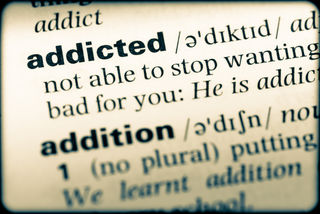
I believe that habitual criticism of a spouse is an addiction just like a heroin or alcohol addiction. Chronic criticism in my mind shares all the features of a typical addiction. This is because critical people cannot seem to stop their criticisms (just like an alcoholic can’t stop drinking) and seem to seek out situations where they can be critical (like an alcoholic searches for alcohol). Furthermore, they feel better when they are criticizing their spouse just the same as alcoholics do when they drink. And although I am unaware of such research, I would hypothesize that there are even similar brain events going on in the brains of those who are addicted to alcohol and those who are addicted to criticism. 
I have used in my practice a very simple procedure to determine whether or not a particular spouse is addicted to criticism. It is fast and simple and usually produces accurate results. I say to the critical spouse that there are two types of critical people: One type offers good advice to their spouses because they truly want to help their spouse out of altruistic reasons; while the second group has an actual addiction to criticism and are trying to regulate their own feelings by hurting their spouse. I go on to say that there is a simple test to determine which type they are. For one week, they are not allowed to offer any criticism of their spouse. If the person is truly addicted, they will not be able to stop. If they are simply offering advice, it would be easy for them to stop. In most cases, the person is forced to admit that they could not stop and may have to look into themselves as the source of criticism. In most cases and much like the alcoholic, the critical spouse cannot stop.

It is easy to dislike a critical person and dismiss them as being the source of all problems. But if you look into their pasts, you will most likely find that they themselves were the victims of criticism as children. When this type of constant criticism of a child occurs, it creates brain changes, producing a schema; or more simply a distorted lens through which a person looks and interprets life’s events. This schema leads them to seek out the bad somewhere in the good. Something can be 99 percent wonderful, for example, but they will focus on the 1 percent that is “wrong." They might see a great movie only to focus on the minutia of something they didn’t like ("the star seems to be balding"). They might go to a party where everybody enjoys themselves but they feel a particular hors d’oeuvre could have been spicier or that a particular party-goer was too loud when they spoke.
Sadly, as critical as a critical person is with others, they are often more harshly critical of themselves. They can be their own worst critic. I have found that when an individual can openly accept this in themselves, the marriage improves.
Oh yeah, and the “addict” has a real chance of being set free.

Neil J Lavender Ph.D.


Black Friday and Cyber Monday Deals: Marriage Bootcamp


MARRIAGE INTENSIVE BOOTCAMP
8 HOUR SESSION @ $475

Provides you with an 8-hour private intense session scheduled at your convenience. Can be used as enrichment or for any couple dealing with a challenge.
Compare to $950 regular price == that's a savings of $475 or 50% OFF!

Sale ends Cyber Monday @ 11:59pm


Black Friday/Cyber Monday Specials

Black Friday and Cyber Monday Deals

 
Take advantage of Black Friday and Cyber Monday deals!

Deals for 2014 are 25-50% OFF allowing you to get more bang for your buck.
This offer is only available until 11:59pm PT Cyber Monday, so act now!

Once you've purchased your deal don't forget to schedule your appointments:
  • An initial consultation - phone or office
  • Assessment visit (if needed)
  • Scheduled appointments
Who says Black Friday and Cyber Monday have to be for retail items only. Save on counseling now!

My Bible Culture

My Bible Culture
DISCOVER A NEW AND EASY WAY TO EXPERIENCE THE BIBLE LIKE NEVER BEFORE. DIGITAL & HARD COPY AVAILABLE NOW . >King James version Bible > 7 Color Coded Sections > Comic Style

Let's Connect On Instagram