Pages

Search This Blog

Showing posts with label relationships tips. Show all posts

The Quandary: Feeling Responsible for What’s Not Mine with Sarita Lynn

WALDORF, Maryland, author, and publisher of The Quandary: Feeling Responsible for What’s Not Mine.  Book Sarita Lynn for your next event or book signing. Hear her transparent story about enabling her brother who had a drug addiction for 27 years and learn steps how not to be an enabler. Sarita now spends her time helping others who find themselves in codependent relationships and want to break the cycle of feeling guilty and responsible for what’s not theirs.

The Quandary will teach you to identify the warning signs of codependency, walk you through an action plan to break the cycle, and then teach you how to finally make yourself a priority, and not feel guilty! Life has a way of presenting situations that may leave you in a quandary. It's how you respond during these times of perplexity and uncertainty that will determine if you will enable a person’s destructive behavior or hold them accountable for their actions. 
Sarita Lynn also looks forward to the opportunity for a collaboration to share her story with you and your audience and distribute her book at your venue. You can purchase The Quandary on www.skiepublishing.com, Amazon.com and at local bookstores. To schedule a book signing or speaking engagements please contact Sarita Lynn at the below contact information.
--------------------------------------------
About the Author
Sarita Lynn… is the CEO of Skie Publishing, LLC. She has her bachelor’s degree in Behavioral Social Sciences from the University of Maryland University College. Sarita currently serves as Vice Chair, Charles County Commission for Women where she works to raise awareness of issues affecting women and families by serving as a conduit between women and existing services and advocating for programs, education, and legislation. 
Sarita is a senior HR Practitioner to drive strategy and organizational change. She is the proud mother of two beautiful daughters, Ebony and Imani.  

Phone: (240) 754-7740

Email: saritalynnbooks@gmail.com (speaking engagement or book signing)                                    

I Love You, But I Am Leaving You

“I Love You, But I Am Leaving You”

When love is not all you need.


“I’m sorry, I love you, but I have to leave you. You were the right choice, but not my ‘happy’ choice.” —Hallie Mantegna
What?! Did I hear you correctly? If you love me, why are you leaving me? I am definitely missing a piece of this puzzle. But, as it turns out, you may not be missing anything.
Sometimes, love and life clash. Usually, this conflict can be traced to one of two issues: (1) romantic reasons that have to do with the nature of one’s love, and (2) reasons concerning the flourishing life of the partners.
1. "I love you, but not strongly enough."
“There is a difference between someone who wants you and someone who would do anything to keep you. Actions speak louder than wishes.” Unknown
Romantic love is not an all-or-nothing attitude—it comes in different degrees. Some degrees are good enough for having an affair for a few weeks or months, but not sufficient for sustaining long-term love (Ben-Ze’ev & Krebs, 2018).
Examples of common reasons in this group are:
“I found a new lover”;
“In the past, I have loved someone more strongly than I love you”;
“I am happy with you in the short term (great romantic intensity), but I do not see prospects for the long term” (not much romantic profundity);
“We are great sexual partners, but not good friends”;
“We are profound friends, but not great sexual partners”;
“There are major flaws in your behavior preventing me from trusting you and feeling calm with you”;
“I cannot give you the love you deserve”; or more bluntly, “My feelings toward you are not strong enough.”
The reasons in this group are mainly comparative—indicating a lower level of love or romantic suitability. The above differences are often associated with the (ambiguous) statement, “I love you, but I am not in love with you,” which is another claim that has ended many marriages and other committed relationships.  Here, there is some degree of love, but that degree is not sufficient—at least not when compared to other available options.
2. "I love you but cannot live with you."
“Look, I hate good-byes, too. But sometimes, we need them just to survive.” Rachel Caine, Fall of Night
“If I should stay, I would only be in your way, So I’ll go, but I will always love you.” Dolly Parton (and later, Whitney Houston and others)
Long-term romantic relationships should take into account non-romantic factors concerning the living together of the two partners. Loving someone is not always sufficient for deciding to live with someone. Living together and establishing a family together certainly require love—but much more than that. They require the ability to help each other flourish.
Examples of common reasons in this group are:
“You cannot help me to flourish as you do not bring out the best in me”;
“I cannot help you to flourish—on the contrary, being with me blocks your flourishing”;
“We are not suitable for building a long-term, thriving life together”;
“You are not a good father, husband, or provider (though you may be a great lover)”.
In this group of reasons, the degree of love is sufficient for supporting enduring love, but not enduring living together. People sometimes prefer thriving in life over love—it can come down to their own thriving or that of their partner.
An illustration of the first kind is the case of a married woman who said that she loved her first husband very much, but something was missing in their relationship that made her decide to divorce him: “There was nothing wrong with him,’ she said, “but nevertheless I felt that self-fulfillment would not be part of my life. He would not block it, but he will not bring out the best in me. With my second husband, I have many fights, but I do feel his profound passion and ability to bring out the best in me.” This woman chose losing her first husband over losing herself.
An example of preferring the partner’s thriving over love is the case of a partner who, out of profound love, ends a relationship saying that staying together would make his or her beloved miserable in the long term. This is the theme of the popular song “I will always love you,” which many consider the greatest love song of all time. In taking into account this reality, we sometimes hear of a partner, out of profound love, ending a relationship out of concern that staying together would make his or her beloved miserable in the long term. In this case, ending the relationship expresses a genuine interest in the other’s profound well-being.
Is Love All We Need?
“All you need is love.” The Beatles
“All you need is love. But a little chocolate now and then doesn’t hurt.” Charles Schulz
Romantic love has a very positive impact upon one’s life—this is expressed in many ways, such as happiness, flourishing and health. For some people, it is the engine that drives their lives forward. However, people need more than love to flourish. For love to thrive and endure, we need a good-enough living framework. When romantic love thrives, it can contribute to a more general feeling of thriving. Sometimes, however, love and life conflict.
And so, we can find ourselves asking: Which takes precedence: love or life? This can be a hard call. At one extreme, one might sacrifice life for love (let’s remember Romeo and Juliet). At the other, one might sacrifice love for life (remaining in a loveless, but otherwise comfortable, marriage, for example). Of course, most of us make romantic decisions that fall somewhere between these harrowing poles. It is the strength of love, the nature of the life-demands, and the degree of conflict between them, which dictate exactly where we wind up on that continuum.
When intense desire is perceived as the core of romantic love, the conflict between romantic love and life ramps up in volume. Such desire is usually brief and decreases with time. Life, by contrast, tends to last. A lover cannot be blind to life, and love does not always win. In any case, love cannot replace life. When love and life go head-to-head, love almost always loses, especially when it is based on intense desire. In the long run, it is when lovers nurture the connection between themselves and do things which enable each other to flourish that love is maintained and enhanced. That is how ties to the living framework are tightened.
“Goodbye taught me that people don’t always stay and the things that belonged to you today can belong to someone else tomorrow.” Rania Naim, Goodbye doesn’t scare me anymore
The claim that “all you need is love” indicates, as Brian Epstein, the Beatles’ manager, once said: “a clear message saying that love is everything.” Although romantic love is extremely important for our happiness and flourishing, love is neither a necessary, nor a sufficient, condition for happy and thriving life. As it turns out, love is not everything in life, though it is often a central part of it.
If indeed, love is not all we need, then it is certainly reasonable for some people to leave the one they love.
Orginial article found: 
https://www.psychologytoday.com/us/blog/in-the-name-love/201807/i-love-you-i-am-leaving-you

The Defense Mechanism Most Toxic for Your Relationship

Research shows the one defense mechanism especially bad for your relationship.

From the standpoint of avoiding anxiety, it can be hard to beat a good old, ordinary, defense mechanism. If you’re angry at an important person in your life, displacement will let you take your emotions out on a safer target, such as a small rock that you kick out of your way in the sidewalk. If there’s an expensive piece of jewelry that you can’t stop thinking about, but can’t afford, repression will help you shove it out of your consciousness. There are countless other ways that defense mechanisms, when used in moderation, can actually be very adaptive.
In your relationships, though, defense mechanisms can take an unfortunate turn if used in the wrong way. Your partner wouldn’t appreciate being the target of your displaced anger and might not like it if you “repressed” your putting off unpleasant chores around the house. However, above and beyond these less than optimal uses of defense mechanisms, one stands out as particularly toxic. In the defense mechanism of projection, you attribute your own unconscious anxieties and preoccupations onto another person. You then become, naturally enough, annoyed at that person for having those same emotions and thoughts that you reject in yourself.
New research on social perception shows that projection can turn what should be empathy into an unfeeling lack of concern if your partner is in trouble. A study on stress mindsets by Tel Aviv University’s Nili Ben-Avi and collaborators (2018) shows what happens when your own attitude toward stress makes you unsympathetic to a person who is clearly undergoing strain. In one type of stress mindset, or attitude toward the stressful events in your life, you find pressure to be exhilarating, and in the other, you find it to be debilitating. The Israeli researchers believe that the way you perceive stress in your life will, in turn, affect the way you perceive that of other people. If you’re of the belief that stress is good, you’ll regard it as silly complaining when it gets to your partner, who puts in long hours full of competing demands. If you regard stress as a frame of mind to be avoided at all costs, you’ll similarly feel that your overworked partner should find a different job or at least stay away from any work tasks in the evening and weekend hours.
Ben-Avi and colleagues take an experimental social psychological approach, meaning that they don’t truly speak of “defense mechanisms” as having that same set of unconscious drivers as do psychodynamically-oriented theorists. Nevertheless, the idea of “social projection” seems to fit the classic defense mechanism approach, as you can see from this definition: “when people try to evaluate targets' thoughts, feelings, or behaviors, they often project their own corresponding states, thereby arriving at inaccurate social judgments” (p. 98). Believing that your partner feels the same way about stress as you do clearly fits into this definition of social projection.
The Israeli study showed that people high on the “stress-as-exhilirating” mindset were less likely to see a fictitious target in an online scenario as suffering from the negative effects of burnout, and to suffer ill effects on health. They also were less likely to believe that the target should stay home when ill (“presenteeism”). The way participants viewed stress also affected the way that they would make personnel decisions about the fictitious employee. If they felt that they personally thrived on stress, then they believed that employees who didn’t share this mindset shouldn’t be promoted, as they did not view the employee as potentially suffering from burnout.
An experimental manipulation that the authors conducted as part of their research involved priming participants into one of the two stress mindsets by having them think either about a time in their lives when they felt overworked or, conversely, when they felt energized. This method showed that your stress mindset can be malleable. People operating under a stress-is-enhancing mindset perceived the target as experiencing less strain and therefore as in need of less help. They also saw the target as more promotable at work. As the authors conclude, there is a dark side and a bright side regarding the interpersonal implications of the idea that stress is enhancing. The dark side is that if you believe stress is good for you, you’ll also believe it’s good for someone else and will offer less help to someone who seems to be on the verge of extreme burnout. On the bright side, though, perceiving another person as operating under high levels of stress may make you see that person as better able to handle stress and so you’ll give that person more responsibility (and maybe a promotion).
In terms of your relationships, though, the Israeli findings suggest that projection isn’t just a theoretical concept left over from the psychoanalyst’s couch. People judge others on the basis of their own preferences, self-assessments, and attitudes. As a result, it will be difficult for you to provide the kind of empathy that can help your partner feel supported and loved when work or family obligations make life particularly difficult.
To overcome the projection you may feel toward your partner, take a page from the Ben-Avi et al’s playbook and try to recall the last time you felt the way you believe your partner to be feeling. Perhaps your partner seems overly sensitive to a mutual friend’s somewhat unfortunately sarcastic jokes. If you have a tendency toward the cynical, your partner’s sensitivity may seem to be too extreme. Try to recall a time when you were the target of a similarly unfortunately comment. That teasing really did hurt you. Just remembering that incident may allow you to see the world from your partner’s own eyes. This exercise might also help you see that you’re not quite as resistant to teasing as you thought you were.
Happiness in long-term relationships depends in many ways on being able to overcome your own tendency to impose your wishes onto your partner. Projection can prevent that open-minded understanding that helps foster true communication with your partner. A simple self-check can help you avoid the projection trap and, in the process, help your relationship become that much more fulfilling.

Orginial article: https://www.psychologytoday.com/us/blog/fulfillment-any-age/201806/the-defense-mechanism-most-toxic-your-relationship

Are Millennial Men Rejecting “Manhood”?

A major evolution is underway among millennial men and women in their values.

Douglas LaBier, Ph.D.
In this era of #MeToo, and controversy about “toxic masculinity,” some new research is very relevant: It indicates a shift is underway in how young men envision “manhood” — in their attitudes, their values, and their behavior — in their relationships, their careers, and their view of “success.”  I think we’re in the midst of a generational evolution with large-scale societal and political implications. 
To illustrate, one study (link is external)of over 600 millennial-aged men found that they are likely to be selfless, in contrast to the old “looking out for number one” attitude. They are also socially engaged with issues and causes and are highly health-conscious. 
Overall, this study from the University of British of Columbia(link is external) found that the masculine value they most strongly endorsed was selflessness. As described in this report(link is external), “Ninety-one per cent of the men agreed that a man should help other people, and 80 percent believed that a man should give back to the community. Openness also ranked highly — 88 per cent said a man should be open to new ideas, new experiences, and new people — and so did health, with a majority of participants saying that men should be healthy or in good shape.” 
Moreover, the traditionally “male” values ranked lower on the scale. They are still valued by the majority of participants, but less so than other values. For example, 75 per cent of the men said that a man should have physical strength, compared with 87 per cent who said a man should have intellectual strength, and 83 per cent who said emotional strength. Autonomy was also ranked lower, with 78 per cent saying that a man should be “independent.”
I think these findings are significant as generational shifts continue. Although the study was conducted with men from Western Canada, they likely reflect a broad, growing theme among the attitudes and values among younger people who enter adulthood in an increasingly diverse, interconnected world. As lead author John Oliffe said(link is external), they “…seem to be holding masculine values that are distinctly different from those of previous generations. These values may run counter to long-standing claims that young men are typically hedonistic, hypercompetitive, and that they risk or neglect their health.” Added co-author Nick Black(link is external), they “…are expanding their definition of masculinity to include values like openness and well-being. The study was published in Psychology of Men & Masculinity. (link is external)
We’re also witnessing the impact of millennial values — among both men and women — upon the workplace, in how they deal with their work and careers. For example, a new study(link is external) finds that millennials are prone to leave their jobs when they experience a “values gap” between themselves and the workplace culture – particularly around sustainability issues.
That’s especially notable because it contrasts with older generations. That is, many people report great dissatisfaction and dislike with their management and leadership culture, as many surveys and polls show. But most tend to suffer emotionally and physically; often frozen in place, perhaps from fear of losing what they already have, or insecurity about change.
Millennials appear to have a different mentality altogether. A summary of this new study from the University of Missouri(link is external) reports that millennials tend to job hop – something well known about them, and that older workers don’t understand. And a major reason is that they feel a disconnection between their personal values and the workplace culture. As one of the researchers, Rachel LoMonaco-Benzing explained,(link is external) “Not only did we find a gap, but we also found that workers were much more likely to leave a job if they felt their values were not reflected in the workplace.”
Co-author Jung Ha-Brookshire added(link is external) “They have been raised with a sense of pro-social, pro-environment values, and they are looking to be engaged. If they find that a company doesn’t honor these values and contributions, many either will try to change the culture or find employment elsewhere.” The researchers say that companies need to understand that the new generation of workers have high ethical and social expectations. The study was published in the journal Sustainability.(link is external)
All of these changes in values, attitudes and behavior among millennials are likely to have increasing impact on all realms of our society in the years ahead. Stay tuned!

Original article
https://www.psychologytoday.com/us/blog/the-new-resilience/201806/are-millennial-men-rejecting-manhood

Disregard Of Godly And Sound Traditional Marriage Values


With the help of a Loveawake.com dating site, I interviewed more than 10,000 people from around the world to compile some quantitative data and marriage statistics. Here are her most shocking and illuminating findings—and the numbers to back them up. When you break that down by the number of marriages:

41 percent of first marriages end in divorce.
60 percent of second marriages end in divorce.
73 percent of third marriages end in divorce.

Let it be realized, once again, that marriage is intended by God for the fulfillment, happiness, and pleasure of men and women. A mature man or woman is incomplete without marriage because two are better than one. And the two are meant for the happiness, joy, and pleasure of each other. So any regret or crises in marriage is an abnormality. Such problems, especially when they cannot be resolved by the married couples, are not of God, the institutor of marriage.
The brain behind all problems in a marriage relationship is Satan. Satan and his angels are mischievous – all they do is to cause problems and disobedience. They know that when a marriage has problems, it will affect every other thing the couples do. It will affect the home and the society generally. This is so because sound marriage relationship is indispensable to sound society.
One of the ways Satan unleashes his terror against marriage relationship is by causing the couples to disregard the Word of God – the foundation and pillar of marriage. God ordained marriage and gave each partner his or her role in it. If those roles and rules are followed by each partner, there will be harmony and love. But instead of the Word of God being the guiding principle in marriage relationships, all we see and hear are agitations for equality of sexes and the subjugation of womenfolk.
Aside from the Word of God, various societies have traditional values aimed at safeguarding the institution of marriage. Where those values are good, they have also been attacked by frivolous modernity orchestrated by the devil. Otherwise, what is the rationale for arguing that traditional values that safeguarded the marriage relationships of our forebears and made them have fulfilled and pleasurable marriages are now outdated? Yet, the so-called modern values have only brought ruin to our marriages, homes and the society.
The Bible and most other traditional marriage values teach submission by the wife, love, care, respect, and faithfulness to each other, etc. If married couples should go back to these values, marriage relationships would return to what they should be.

About Rinatta Gilles
I have been helping clients fix their love lives for more than 12 years. Many people before you have taken this journey with me, and without exception, their love life --and their whole life -- was changed for the better. I invite you to believe that what you have always dreamed for your love life can be possible for you. I can help you get there.


40 Day Freedom Challenge


Do you want to improve your relationship with those you love?  Are you searching for a deeper spiritual connection?

The 40 Day Freedom Challenge aims to help you do just that and more. Based on time-tested Biblical Principles this book lays out a forty-day plan to guide you toward greater health, obtain purpose-filled wealth, and improve your interpersonal relationships and embrace a solid path to more meaningful spiritual development.

If you’re ready to get your life back on God’s path, buy your copy of The 40 Day Freedom Challenge this March!

============================
ABOUT THE AUTHOR


Related imageShea Vitartas has worn many hats in his career. Since earning his MBA from Pepperdine University, he co-founded the myQrew mobile app, founded WorldCanvas.com and mbabookeepers.com. In addition to his entrepreneurial endeavors, he found a passion for helping others to achieve greatness in their business lives and, most recently, in their personal lives.


A storyteller by nature, he used his verbal skills to help refine systems and metrics to help others achieve success in their endeavors. That work laid the foundation for his current project the 40 Day Freedom Challenge that aims to guide those seeking deeper meaning and stronger connections with their faith to a life filled with meaning and purpose by following biblical principles.

When not working on his many projects or volunteering his time and expertise to help others succeed, he enjoys outdoor adventures with his family near his home in Los Angeles. To learn more about Shea or any of his projects, visit his website: 40dayfreedomchallenge.com

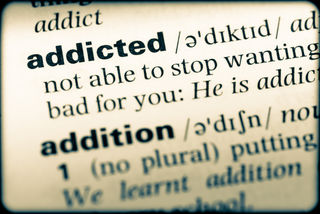
Warning: You or Your Spouse May Be Addicted to Criticism


This simple test could reveal the truth about your marriage.


Photo by Shutterstock. Used by permission.There is this story about 2 judges who were meeting for lunch. One was matrimonial and the other adjudicate criminal cases. The criminal court judge said “Do you know the difference between my court and yours? In criminal court, my cases involve really bad people who try to look really good. In your matrimonial cases, you have really good people who look really bad.”
Marriage is hard and deeply complex and yes indeed, it can bring out the worst in even us really good people.
Did you ever listen to couples argue? It’s horrible. Two people in love trying to destroy the other. The things they say to each other:
“You don’t know what you’re talking about. You never know what you are talking about.”
“Can you possibly be any more stupid?”
“Your mother did the same thing her whole life and now you’re doing it. She has totally ruined you.”
“You are one coldhearted bitch!”
Marriage is the single most difficult thing most people will do in their lifetimes. To be in constant contact with one person day and night, year in and year out takes almost everything a human being can endure. I don’t think a could even live with myself over a lifetime! It can squeeze us to our limits, bringing out the worst in us, a fact that TV sitcoms have used for years to make millions by having us laugh at marriage.
Let’s face it, couples argue and fight. But couples can go beyond that and become critical of each other’s very personality and identity, often going on a “search and destroy” mission in which they find their partner’s weakest attributes and hammer away at them.
I’m not talking here about what most people call constructive criticism. There are clear differences between criticism and offering advice or even critiques. When an individual is critiquing or making suggestions, they are sticking to the issues at hand. When a person becomes critical, they are attacking the very essence of their loved-one's personality. In a healthy relationship, a couple would naturally offer advice or suggestions to the other. This would be based on a healthy interdependence in which each one would influence the other in love. Criticism, on the other hand, tears a person down while remaining nonproductive in resolving marital issues.
For years, psychologists have recognized that day-to-day criticism by a parent of their child can be so harmful that it can produce any number of mental disorders in the child. Our psychotherapy practices are packed with individuals who have had critical parents. And although it can have similar effects in marriage as well, divorce is the most likely outcome.
Marriage guru John Gottman along with his wife Julia have shown in their empirical research that criticism of a spouse can greatly increase the chances of divorce. Best known for their famous “Love Lab,” the Gottmans collected data on hundreds of couples in real time, scientifically observing and processing couple interactions. They identified what is called the “Four Horsemen of the Apocalypse of Divorce." These are criticism, contempt, defensiveness, and stonewalling. The Gottmans have shown that these four things in a marriage have a high likelihood of producing a divorce. While the present blog addresses only criticism, I encourage you to learn more about the other three and in the Gottman’s research in general.
I believe that habitual criticism of a spouse is an addiction just like a heroin or alcohol addiction. Chronic criticism in my mind shares all the features of a typical addiction. This is because critical people cannot seem to stop their criticisms (just like an alcoholic can’t stop drinking) and seem to seek out situations where they can be critical (like an alcoholic searches for alcohol). Furthermore, they feel better when they are criticizing their spouse just the same as alcoholics do when they drink. And although I am unaware of such research, I would hypothesize that there are even similar brain events going on in the brains of those who are addicted to alcohol and those who are addicted to criticism. 
I have used in my practice a very simple procedure to determine whether or not a particular spouse is addicted to criticism. It is fast and simple and usually produces accurate results. I say to the critical spouse that there are two types of critical people: One type offers good advice to their spouses because they truly want to help their spouse out of altruistic reasons; while the second group has an actual addiction to criticism and are trying to regulate their own feelings by hurting their spouse. I go on to say that there is a simple test to determine which type they are. For one week, they are not allowed to offer any criticism of their spouse. If the person is truly addicted, they will not be able to stop. If they are simply offering advice, it would be easy for them to stop. In most cases, the person is forced to admit that they could not stop and may have to look into themselves as the source of criticism. In most cases and much like the alcoholic, the critical spouse cannot stop.

It is easy to dislike a critical person and dismiss them as being the source of all problems. But if you look into their pasts, you will most likely find that they themselves were the victims of criticism as children. When this type of constant criticism of a child occurs, it creates brain changes, producing a schema; or more simply a distorted lens through which a person looks and interprets life’s events. This schema leads them to seek out the bad somewhere in the good. Something can be 99 percent wonderful, for example, but they will focus on the 1 percent that is “wrong." They might see a great movie only to focus on the minutia of something they didn’t like ("the star seems to be balding"). They might go to a party where everybody enjoys themselves but they feel a particular hors d’oeuvre could have been spicier or that a particular party-goer was too loud when they spoke.
Sadly, as critical as a critical person is with others, they are often more harshly critical of themselves. They can be their own worst critic. I have found that when an individual can openly accept this in themselves, the marriage improves.
Oh yeah, and the “addict” has a real chance of being set free.

Neil J Lavender Ph.D.


My Bible Culture

My Bible Culture
DISCOVER A NEW AND EASY WAY TO EXPERIENCE THE BIBLE LIKE NEVER BEFORE. DIGITAL & HARD COPY AVAILABLE NOW . >King James version Bible > 7 Color Coded Sections > Comic Style

Let's Connect On Instagram